Can you trust running coach apps? We compare Garmin, Runna and Strava, exploring the benefits and limitations of AI-generated training plans.
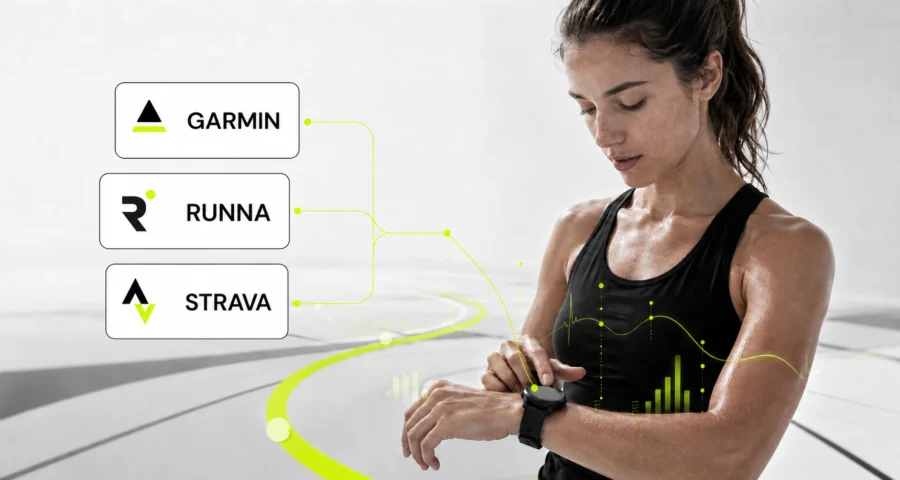
Running coach apps promise personalised training plans, automatic adjustments and expert guidance from your phone – but can you genuinely trust them? From Garmin and Runna to Strava, we explore how these platforms work, where they can improve your running and when a human coach may still be the better choice.
Your watch knows how far you ran. It has an estimate of your heart rate, sleep, recovery, training load and VO₂ max. Your apps know which sessions you completed, which ones you skipped and what race you entered.
It seems logical that artificial intelligence should be able to turn all of that information into the perfect training plan.
Garmin, Runna and Strava are increasingly moving in that direction. They can build workouts, adjust targets, analyse completed runs and remove much of the daily decision-making from training. For runners without access to a personal coach, that can be genuinely useful.
But an algorithm noticing that your pace has slowed is not the same as a coach understanding why. It cannot necessarily tell whether you are fatigued, under-fuelled, stressed, becoming unwell or simply running into a headwind.
So, can you trust an AI running coach? Yes – with limits.
The short answer
AI running tools can be trusted to provide structure, consistency and data-led suggestions. They are less reliable when a decision depends on pain, illness, nutrition, menstrual health, emotional stress or circumstances that are not represented accurately in the data.
Of the three platforms:
- Garmin Coach is best for runners who already use a compatible Garmin watch and want an integrated adaptive plan without another coaching subscription.
- Runna provides the most complete multi-week, race-specific coaching experience, with structured workouts, schedule controls and optional strength work.
- Strava is strongest for analysing completed activities, tracking progress and suggesting individual workouts. Its current Instant Workouts feature is not the same as a progressive race plan.
The smartest approach is to use the technology as a co-pilot – not an autopilot.
First: what does “AI running coach” actually mean?
The phrase is used loosely. These platforms do not all use artificial intelligence in the same way, and not every adaptive feature is generative AI.
An AI or adaptive running tool may combine:
- Human-designed training principles: Coaches and sports scientists create the underlying session types and progression rules.
- Algorithms: Software selects or adjusts sessions using your goal, experience, schedule and training history.
- Wearable data: Heart rate, pace, sleep, VO₂ max, recovery and training load may influence recommendations.
- Generative AI: A model turns activity data into natural-language feedback or explanations.
Garmin largely uses watch data to adapt a structured plan. Runna uses its coaching system to personalise and rebuild training around a runner’s goal and schedule. Strava uses generative AI for activity analysis and a recommendation system for weekly workout choices.
Calling all three an “AI coach” makes them sound interchangeable. They are not.
Garmin Coach: the watch-led option
Garmin Coach sits inside Garmin Connect and offers two broad approaches for runners: adaptive plans linked to named professional coaches and Garmin Run Coach, which uses data from a compatible watch to personalise training.
Garmin says Run Coach can consider metrics including VO₂ max, lactate threshold, training history, performance, health and recovery data. Runners can choose their available days, set a goal or end date and add race and course information. Workouts then sync directly to the watch.
What Garmin does well
Everything is in one ecosystem. Your training plan, completed runs, recovery information and scheduled workouts live in Garmin Connect and on your wrist. There is less need to move between apps.
It uses more than pace alone. Compatible devices can feed recovery and performance metrics into the plan, allowing recommendations to reflect recent training rather than relying only on a target race time.
The plan is included. Garmin describes Coach as a free custom-plan feature, although runners need a compatible Garmin device to access the full experience.
It is convenient during workouts. Intervals, recovery periods and targets appear on the watch, reducing the need to memorise a session or repeatedly check a phone.
Where Garmin has limits
Garmin’s greatest strength is also its weakness: the recommendation depends heavily on the information collected by the watch.
Consumer wearables are useful, but their measurements are not perfect. A large review of wearable-validation research found that heart-rate estimates were generally more reliable than measures such as exercise intensity, energy expenditure, sleep and VO₂ max. Even a small error can affect how a recovery or training recommendation is interpreted.
The watch also cannot automatically understand every part of your day. A poor night of sleep may be recorded, but a difficult week at work, low energy intake or the first signs of a niggle may not be.
Best for: Garmin users who want a convenient, integrated plan and are comfortable using watch data as guidance rather than unquestionable fact.
Runna: the structured race-plan option
Runna is built primarily as a running-coaching app. It creates personalised plans around factors including race distance, target, current ability, available days, preferred long-run day and desired number of weekly runs.
Plans cover runners from beginners through to experienced athletes and can include easy runs, long runs, tempo sessions, intervals, hills and optional strength training. Structured workouts can sync with devices including Garmin watches, while completed activities can sync back into Runna and across to Strava.
Strava acquired Runna in 2025, but Runna continues to operate as a distinct coaching app. The connection between the two is becoming closer: in July 2026, Strava added Runna’s race database to its Events experience, allowing runners to discover races and move towards a custom Runna plan.
What Runna does well
It provides the clearest long-term structure. Runna is designed around a complete training block rather than isolated workout suggestions. Runners can see how easy running, speed work, long runs and recovery weeks fit together before race day.
The plan is highly configurable. Users can change training days, weekly frequency, long-run day, volume and difficulty. Plans can also include strength, mobility and conditioning sessions.
It handles disrupted training better than a static plan. A single session can be moved or skipped. Missing several workouts can trigger Plan Realignment, which may offer to extend, rebuild or continue the plan depending on the goal and time remaining.
It provides live workout guidance. Pace targets, intervals and recovery instructions can be sent to a compatible watch, which is useful for runners new to structured sessions.
Is Runna fully adaptive?
Not in the sense that every completed run silently rewrites the entire plan.
Runna’s current Pace Insights feature monitors eligible pace-based sessions and may suggest faster or slower targets when it sees a consistent pattern. According to Runna’s support information, the runner must accept that recommendation before the plan changes.
That is not necessarily a weakness. Requiring confirmation prevents one unusually good or bad session from making a large automatic change. It does, however, mean the user still needs to make sensible decisions rather than assuming the app is continuously managing everything in the background.
Where Runna has limits
Runna is a paid coaching product, so it represents an additional cost unless accessed through an available bundle. Its pace targets also depend on the ability and race-time information supplied by the user. An unrealistic starting estimate can create an unrealistic plan.
The app can reduce or rebuild training when you say you are not feeling well, but it cannot diagnose an injury or determine whether pain is safe to run through. Its own guidance recommends professional assessment for more serious injury or illness.
Best for: Runners training towards a specific race who want a detailed plan, clear pace guidance and more scheduling flexibility than a watch-led programme.
Strava: analysis, motivation and individual workout ideas
Strava has historically been a tracking and social platform rather than a coaching app. In 2026, that line has become less clear.
It now offers two relevant features for subscribers: Athlete Intelligence and Instant Workouts.
Athlete Intelligence
Athlete Intelligence uses generative AI to create a written analysis of a completed activity. It can interpret data such as pace, Grade Adjusted Pace, heart rate, zones and recent training context. Strava says it may use relevant previous activities—for example, the previous 30 days when discussing Relative Effort.
This can make complicated statistics easier to understand. Instead of showing only numbers, Strava might highlight a pace pattern, explain how the run compares with recent training or identify where effort increased.
But it is primarily retrospective. It explains what happened; it is not, by itself, a full progressive training plan.
Instant Workouts
Instant Workouts gives subscribers a new batch of personalised activity suggestions each week. Recommendations use the focus selected in Strava—build fitness, stay active, train for an event or recover—along with preferred sports and recent activity history.
The workouts can be filtered by easier, steady, harder or variety, and compatible runs can be sent to Garmin or Apple Watch. Strava may also generate a suggested route.
This is useful when you want an appropriate session today but do not need a complete 12- or 16-week plan. Strava itself distinguishes the feature from Runna: Runna is intended for event-specific training plans, while Instant Workouts provides broader inspiration and motivation.
Where Strava has limits
Instant Workouts are refreshed weekly and currently cannot be saved beyond that week. Direct customisation is limited, and Strava says health conditions or injury details entered as part of a focus are not used for personalisation.
That guardrail is sensible, but it also highlights the boundary of the feature. Strava can suggest a lighter workout. It cannot assess an injury or make a clinical return-to-running decision.
The social side of Strava can also influence how runners use the advice. An “easy” recommendation is only useful if the runner is willing to keep it easy rather than chasing a segment, average pace or someone else’s training.
Best for: Runners who already use Strava and want clearer feedback, progress insights and flexible session ideas without committing to a full coaching plan.
Garmin vs Runna vs Strava: at a glance
| Garmin Coach | Runna | Strava | |
|---|---|---|---|
| Main purpose | Adaptive training inside the Garmin ecosystem | Complete personalised running plan | Activity analysis and weekly workout suggestions |
| Strongest feature | Watch and recovery-data integration | Structured race preparation | Simple insights from existing activity data |
| Long-term race plan | Yes | Yes—the most detailed of the three | Runna is the dedicated option for event plans |
| How it adapts | Performance, recovery, health metrics and training history | User settings, missed training, accepted pace insights and plan adjustments | Focus, activity history and workout feedback |
| Device support | Compatible Garmin devices | Multiple supported watches and app integrations | Phone recording plus compatible Garmin and Apple devices for sent workouts |
| Strength training | Available through Garmin coaching features | Optional runner-specific strength plan | May appear among broader workout suggestions |
| Access | Included with compatible Garmin ecosystem | Paid coaching subscription | Coaching-related features require a Strava subscription |
| Best for | Existing Garmin users | Goal-focused race training | Analysis, motivation and flexible workout ideas |
Features and access can change, so check the current app and compatibility information before subscribing or purchasing a device.
What AI running coaches get right
They remove decision fatigue
Training often fails because runners do not know what to do next. A sensible session appearing on a watch is easier to follow than building a plan from dozens of conflicting articles.
They encourage variety
The better platforms combine easy running, longer aerobic work and faster sessions rather than prescribing the same moderate run every day.
They make structure more accessible
Not every runner can afford or needs a one-to-one coach. A well-designed app can provide an affordable step between a generic online plan and individual coaching.
They create accountability
Progress bars, scheduled workouts and post-run feedback can help runners remain consistent. For many recreational runners, consistency will matter more than finding a supposedly perfect session.
They can spot trends humans miss
Software can compare weeks of pace, heart rate and training load more quickly than a runner scanning individual activities. Used carefully, those trends can support better decisions.
Where the technology still struggles
Bad data creates confident recommendations
If heart-rate zones are wrong, a watch fits poorly or activities are missing, the resulting recommendation may look precise without being accurate. AI does not make unreliable input reliable.
It cannot feel what you feel
An app sees pace and heart rate. It does not feel the sharp pain in your shin, notice that you are becoming anxious around food or understand that an “easy” run felt unusually difficult.
It has an incomplete view of recovery
Sleep scores and HRV can be useful, but recovery also includes nutrition, work, caring responsibilities, illness, travel and mental stress. Some of that context never reaches the algorithm.
It may mistake compliance for success
Completing every prescribed session is not automatically good training. Sometimes the best decision is to stop, shorten a run or take a rest day. A green tick should not overrule judgement.
The evidence is still developing
A 2025 scoping review of large-language-model exercise and health coaches found that evaluation methods were inconsistent and often lacked real-world testing. The technology is developing faster than the independent evidence used to validate it.
Five checks before trusting an AI-generated plan
1. Does week one reflect what you actually do now?
A plan should begin near your current sustainable training load—not the mileage you completed once, several months ago, or hope to manage soon.
2. Are the easy sessions genuinely easy?
If every run includes a demanding pace target, the plan may not provide enough separation between stress and recovery. Easy running should feel controlled and conversational for most runners.
3. Does the workload progress gradually?
Look at the whole plan. Mileage, long-run distance and intensity should build with recovery opportunities included. There is no single percentage rule that suits everyone, but sudden large jumps deserve scrutiny.
4. Can it respond when life interrupts the plan?
A useful system should allow sessions to be moved, skipped or reduced without encouraging runners to squeeze missed workouts together.
5. Can you understand why the session is there?
The best coaching – human or digital – helps you understand the purpose of a workout. If the recommendation cannot be explained, it is harder to judge whether it fits your goal.
When a human coach is the better choice
An app may be enough for a healthy runner with a straightforward goal and relatively predictable schedule. Human support becomes more valuable when you are:
- returning from injury or repeatedly becoming injured;
- managing a health condition, pregnancy or postnatal return;
- experiencing menstrual disruption, suspected under-fuelling or persistent fatigue;
- balancing several sports or an unusually complicated schedule;
- chasing a demanding performance target;
- struggling with confidence, motivation or fear around training; or
- receiving recommendations that repeatedly feel wrong for your body.
A good human coach can ask follow-up questions, observe patterns outside the data and recognise when the plan needs to change for reasons no watch has recorded.
The verdict
You can trust Garmin, Runna and Strava to organise information and make useful training suggestions. You should not trust any of them to know your body better than you do.
Choose Garmin if you want your plan, recovery data and workouts in one watch-led system. Choose Runna if you want the clearest race-specific structure and are willing to pay for a dedicated coaching app. Use Strava when you want smarter activity analysis, motivation and flexible ideas for what to do next.
Whichever platform you choose, keep the final decision human. Data can inform the session. It should never silence pain, fatigue or common sense.
Use the coach. Do not surrender the judgement.
References
- Garmin. Five ways to use Garmin Coach on your watch. 15 June 2026.
- Strava Support. Athlete Intelligence on Strava. Accessed 7 August 2026.
- Strava Support. Instant Workouts. Accessed 7 August 2026.
- Runna. Explore Runna’s features. Accessed 7 August 2026.
- Runna Support. What are Pace Insights and how do they work?. Accessed 7 August 2026.
- Runna Support. How to use the Plan Realignment feature. Accessed 7 August 2026.
- Strava. Strava adds race and club event discovery. 9 July 2026.
- Fuller D, Colwell E, Low J, et al. Keeping pace with wearables: a living umbrella review of systematic reviews evaluating the accuracy of consumer wearable technologies in health measurement. Sports Medicine. 2024.
- Evaluation strategies for large language model-based models in exercise and health coaching: scoping review. Journal of Medical Internet Research. 2025;27.
- Yang H, Zeng D, Witkowski K, et al. Ethical implications of artificial intelligence in sport: a systematic scoping review. Journal of Sport and Health Science. 2025.
Disclaimer
This article is for general educational purposes and does not provide personalised coaching, medical advice or injury diagnosis. Training recommendations generated by an app or wearable should be adjusted to your experience, health and response to exercise. Speak to a GP, physiotherapist, registered sports dietitian or appropriately qualified coach if you have persistent pain, unusual fatigue, menstrual changes, a health condition or concerns about returning to running.