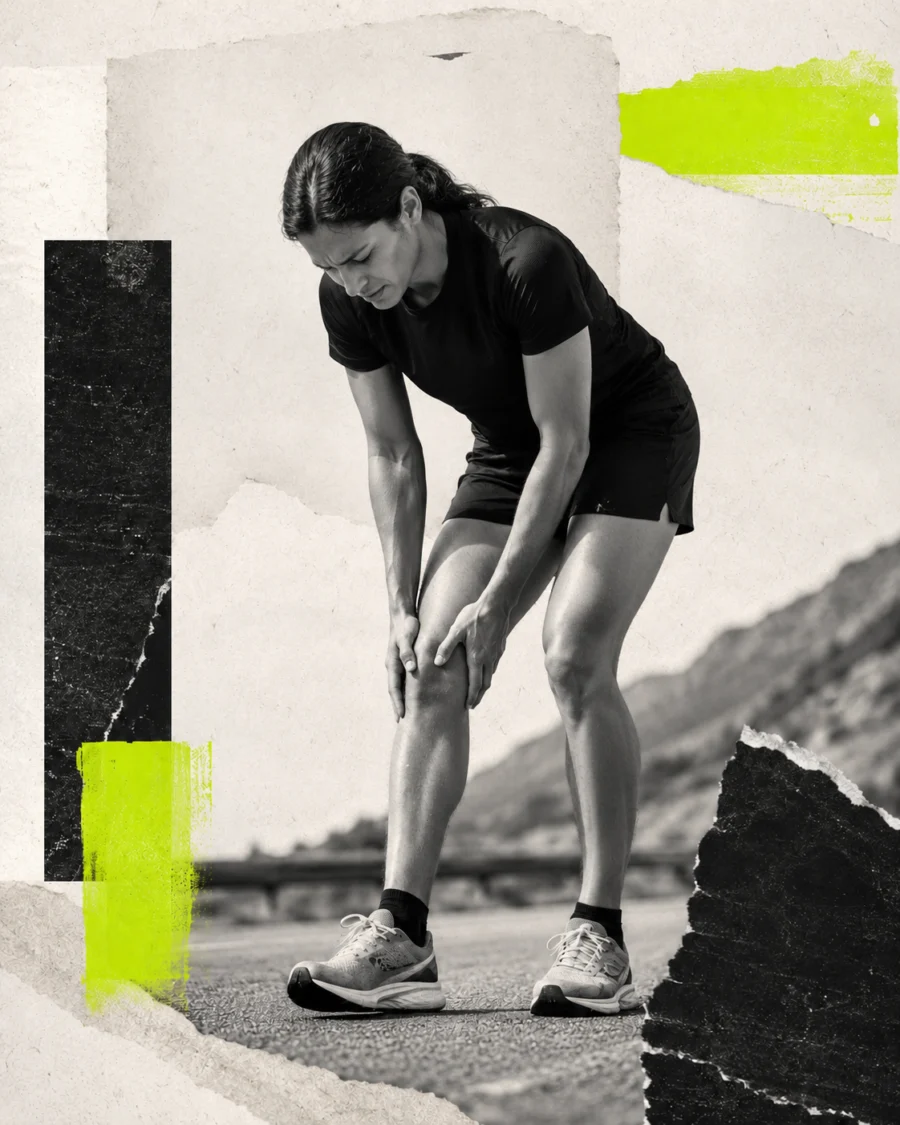
Why is your VO₂ max decreasing? Discover how heat, fatigue, detraining, weight, ageing, altitude and watch errors can make your score fall.
Your watch gave you a VO₂ max of 52 last month. Today, it says 49.
You have not stopped running. You may even be training more. Yet according to the number on your wrist, your cardiovascular system has quietly begun moving backwards.
Before responding with an emergency set of intervals, it is worth understanding what has actually changed.
A falling VO₂ max score does not always mean you have lost aerobic fitness. Heat, hills, fatigue, inaccurate heart-rate data and changes in body mass can all affect the estimate produced by a running watch. Sometimes the decline is real, particularly after reduced training, illness or with advancing age – but even then, the number does not explain your entire running performance.
The useful question is not simply, “Why has my VO₂ max dropped?”
It is:
Has my aerobic capacity genuinely declined, or has the way it is being estimated changed?
THE QUICK ANSWER
Your VO₂ max may be decreasing because:
- Your watch is estimating rather than measuring it.
- You have been running in hotter, hillier or more difficult conditions.
- Fatigue and poor recovery are raising your heart rate.
- Your training volume or intensity has decreased.
- Your body mass has changed.
- You are training or travelling at altitude.
- You have recently been ill.
- Iron deficiency or underfuelling is affecting performance.
- Your aerobic capacity is gradually changing with age.
A one-point change after a difficult run is not evidence that you have suddenly lost fitness. Look for a consistent trend across several weeks and compare it with your pace, race results, training quality and general wellbeing.

WHAT DOES VO₂ MAX ACTUALLY MEASURE?
VO₂ max represents the maximum rate at which your body can take in, transport and use oxygen during intense exercise.
It reflects the combined work of your:
- Lungs
- Heart and circulation
- Blood
- Working muscles
- Cellular energy systems
In a laboratory, VO₂ max is assessed during progressively harder exercise while you wear a mask connected to respiratory gas-analysis equipment. The test measures the oxygen you consume rather than calculating it from your running pace.
Most watches cannot measure oxygen consumption directly. They estimate it using information such as heart rate, running speed, age, body mass and exercise history. The exact inputs vary between devices.
Our complete VO₂ max guide for runners explains what the score means, how it is tested and why it is only one component of endurance performance.
MEASURED VO₂ MAX AND WATCH VO₂ MAX ARE NOT THE SAME THING
| Measurement | What it uses | What can affect it |
|---|---|---|
| Laboratory VO₂ max | Respiratory gases measured during maximal exercise | Test protocol, equipment, motivation, fatigue and exercise mode |
| Watch-estimated VO₂ max | The relationship between heart rate, pace and personal data | Heat, hills, wind, GPS, wrist heart rate, fatigue and device settings |
| Race performance | Your actual result over a set distance | VO₂ max, threshold, economy, pacing, fuelling, weather and psychology |
A systematic review of consumer wearables found that exercise-based algorithms performed reasonably well at population level, but individual errors could still be large.
A more recent study involving 35 endurance athletes found that a Garmin Forerunner 245 underestimated laboratory-measured VO₂ max by approximately four millilitres per kilogram per minute on average. Accuracy was poorer among the more highly trained participants.
That does not make watches useless. They can provide helpful trends when the data and conditions are consistent. It means the displayed number should be treated as an estimate – not a diagnosis of your cardiovascular fitness.
1. YOUR WATCH ESTIMATE HAS CHANGED – NOT YOUR FITNESS
Many running watches estimate VO₂ max by examining how quickly you run relative to your heart rate.
In simplified terms, running faster with a comparatively lower heart rate suggests greater aerobic fitness. Running more slowly while your heart rate is elevated may cause the algorithm to reduce its estimate.
The problem is that heart rate and pace are affected by far more than VO₂ max.
Your score may fall when:
- Wrist-based heart-rate readings are inaccurate
- GPS pace fluctuates around buildings or trees
- Your watch locks onto your running cadence instead of your pulse
- Your maximum-heart-rate setting is unsuitable
- Your recorded body mass changes
- You switch device or the manufacturer changes its algorithm
- You complete fewer outdoor runs that meet the device’s criteria
- Most of your recent training has been on a treadmill or trail
Research comparing wearable estimates with laboratory testing consistently shows meaningful variation at an individual level. The number may move even when your physiology has changed very little.
WHAT TO DO
Check that your age, body mass and heart-rate settings are current. Wear the watch securely above the wrist bone and consider a compatible chest strap if your heart-rate graph regularly contains sudden spikes or implausible readings.
More importantly, judge the trend alongside real running evidence.
If your race times, interval consistency and threshold pace are improving while the watch estimate falls, the watch may be missing part of the picture.
2. THE WEATHER, ROUTE OR SURFACE HAS CHANGED
A familiar pace normally requires a higher heart rate in hot or humid weather.
Your body sends more blood towards the skin to release heat. Sweat loss can reduce plasma volume, while cardiovascular drift causes heart rate to rise even when your pace remains unchanged.
To a pace-and-heart-rate algorithm, this can look like reduced fitness.
The same problem can occur when you run:
- Into strong wind
- Over repeated hills
- On soft trails or sand
- At a higher temperature
- In high humidity
- On a technically difficult route
- While carrying additional equipment
These conditions increase the cost of maintaining pace. Your watch may interpret that higher cost as a lower VO₂ max, even though the run simply demanded more.
Some devices attempt to account for heat and altitude, but the correction cannot perfectly understand every route, weather condition or individual response.
WHAT TO DO
Compare similar runs.
Use a familiar, reasonably flat route and compare pace, heart rate and perceived effort under similar conditions. Do not compare a cool spring road run with a humid trail session and treat the difference as a laboratory finding.
Slow down when conditions require it. Trying to protect a watch score by forcing cool-weather pace in the heat creates unnecessary fatigue and heat risk.
3. YOU ARE CARRYING TOO MUCH FATIGUE
VO₂ max does not exist separately from your ability to express it.
A hard training block, poor sleep, demanding strength sessions, work stress and insufficient recovery can make your normal pace require more effort. Your legs may produce less force, your heart rate may rise earlier and your interval quality may decline.
That can lower a watch estimate without representing a permanent loss of aerobic capacity.
Fatigue is particularly likely when the falling score appears alongside:
- Persistently heavy legs
- Declining session quality
- Poor sleep
- Unusual irritability
- Elevated effort during easy runs
- Repeated soreness or niggles
- Reduced motivation
- Frequent illness
A watch may describe your training as “productive” while your body offers a less enthusiastic review.
If this sounds familiar, read our guides to what your recovery score actually means and why your legs may feel heavy without being sore.
WHAT TO DO
Reduce the load for several days and observe what happens.
Keep easy runs genuinely easy, protect sleep and avoid adding extra intervals purely to force the number upwards. If your pace-to-heart-rate relationship improves once fatigue falls, the problem was probably readiness rather than lost fitness.
Feeling flat during a marathon taper is also common. A temporary sluggish run does not mean reduced mileage has erased your aerobic adaptations.
4. YOUR TRAINING HAS REDUCED OR CHANGED
A genuine decline becomes more plausible when you have substantially reduced endurance training.
This may happen because of:
- Injury
- Illness
- A holiday
- An off-season break
- Work or family demands
- Switching from running to predominantly strength training
- Completing fewer longer or higher-intensity aerobic sessions
A small study involving 15 trained male endurance athletes found reductions in VO₂ max and maximal stroke volume after two weeks without training. Other research suggests the speed and size of detraining vary according to previous fitness, the duration of the break and how active you remain.
One quiet week will not destroy your fitness. A structured recovery week can improve performance by allowing fatigue to fall. But several weeks with substantially less aerobic stimulus can begin reducing the adaptations that support VO₂ max.
Your score can also change when the focus of training changes.
During a marathon block, for example, you may complete more easy mileage and fewer short, high-intensity sessions. Your VO₂ max estimate could remain flat or fall slightly while your durability, fuelling tolerance and ability to sustain marathon pace improve.
That is why running performance involves far more than VO₂ max.
WHAT TO DO
Restore consistency before intensity.
Begin with an amount of easy running you can recover from, then gradually reintroduce threshold or VO₂-focused work. Do not attempt to replace several missed weeks with one punishing session.
If you are unsure how the pieces fit together, our guide to the different types of running training explains the role of easy runs, threshold sessions, intervals and long runs.
5. YOUR BODY MASS HAS CHANGED
VO₂ max is commonly shown relative to body mass:
Millilitres of oxygen per kilogram of body mass per minute
This means the number can fall when body mass increases – even if the absolute amount of oxygen your body can use remains unchanged.
For example:
- Absolute VO₂ max: 3,000ml per minute
- At 60kg: 50ml/kg/min
- At 63kg: approximately 47.6ml/kg/min
The person in this example has not lost absolute aerobic capacity. The value is lower because the same oxygen consumption is being divided by a larger body mass.
Short-term weight changes can also reflect:
- Increased glycogen and water storage
- Menstrual-cycle-related fluid changes
- Creatine supplementation
- A salty meal
- Strength-related muscle gain
- Ordinary scale variation
Do not respond to a small VO₂ max decline by aggressively restricting food. Losing energy availability, recovery capacity or muscle is unlikely to create a better runner simply because one ratio becomes larger.
6. YOU ARE AT ALTITUDE
VO₂ max can genuinely fall when you move to a higher altitude because the partial pressure of oxygen is lower.
Your lungs still breathe air containing roughly the same percentage of oxygen, but the reduced atmospheric pressure means less oxygen is available with each breath. Your heart rate and breathing may rise while familiar paces feel considerably harder.
A watch may also reduce its estimate because it sees you running more slowly at a higher cardiovascular effort.
Acclimatisation can improve how you tolerate altitude, but it does not instantly restore sea-level performance. A temporary decline during an altitude holiday or training camp is therefore not evidence that your previous fitness has disappeared.
WHAT TO DO
Reduce pace and judge runs by effort rather than sea-level expectations. Allow time to acclimatise and avoid forcing intense training during the first few days.
Once you return to your usual elevation, give your body time to recover before deciding that the lower number represents a lasting change.
7. YOU HAVE RECENTLY BEEN ILL
A cold, viral infection or gastrointestinal illness can affect more than the days when symptoms are most obvious.
Illness can:
- Reduce training consistency
- Increase resting and exercise heart rate
- Disrupt sleep
- Affect hydration and appetite
- Reduce exercise tolerance
- Leave lingering fatigue
Returning too quickly can produce slower running at a higher heart rate – the exact combination likely to reduce a watch-estimated VO₂ max.
Mild post-illness sluggishness may improve as you recover and rebuild training. Persistent or worsening exercise intolerance deserves more attention.
WHAT TO DO
Return gradually and use effort rather than your previous pace. Do not try to recover the missing number with high-intensity sessions while you still feel unwell.
Seek medical advice for chest pain, fainting, heart palpitations, unusual breathlessness or fatigue that is severe, worsening or not improving.
8. IRON DEFICIENCY OR UNDERFUELLING IS AFFECTING PERFORMANCE
Oxygen transport depends partly on haemoglobin, which requires iron.
Iron deficiency can make familiar paces feel unusually difficult and may contribute to fatigue, weakness, breathlessness, palpitations and declining exercise performance. Runners who menstruate, follow restrictive diets, have low energy availability or experience gastrointestinal problems may face an increased risk – but anyone can become iron deficient.
Symptoms alone cannot confirm it. Taking high-dose iron without testing can cause side effects and may be harmful.
Read our guide to the warning signs of iron deficiency in runners and speak to an appropriate healthcare professional if you are concerned.
Underfuelling can also reduce training quality and recovery. Low energy availability occurs when too little energy remains to support normal physiological functions after exercise demands have been accounted for.
Look for a wider pattern that may include:
- Persistent fatigue
- Declining performance
- Recurrent injuries
- Frequent illness
- Poor recovery
- Low mood
- Disrupted or absent periods
- Reduced libido
Our guide explains the wider warning signs of underfuelling in runners.
WHAT TO DO
Review total food intake, carbohydrate availability, protein, recent weight changes and the relationship between training and recovery.
Do not assume a supplement will solve the problem. Iron should normally follow appropriate blood testing, while a persistent pattern of underfuelling may require support from a registered sports dietitian or healthcare professional.
9. VO₂ MAX NATURALLY DECLINES WITH AGE
Aerobic capacity generally declines with advancing age – even in people who continue exercising.
Possible contributors include changes in:
- Maximum heart rate
- Stroke volume
- Muscle mass
- Mitochondrial function
- Blood-vessel function
- The muscles’ ability to extract and use oxygen
- Training volume and intensity
A longitudinal study following 99 healthy adults for an average of approximately 13 years found that the age-related reduction in peak oxygen uptake was more closely associated with reduced oxygen use by peripheral tissues than with falling cardiac output.
Training still matters enormously.
A review of masters endurance athletes found that changes in training volume explained a substantial amount of the variation in VO₂ max decline. Ageing athletes who maintained more training generally preserved more cardiorespiratory fitness than those whose training reduced substantially.
For female masters athletes, the exact influence of menopause remains uncertain. A 2026 scoping review found considerable variation between studies and identified training volume and body composition as important factors. Menopause should not automatically be blamed for every falling score.
Our guide to running during perimenopause explains how to adapt training, strength work, recovery and fuelling when symptoms change.
Most importantly, age-related decline is gradual. Age does not explain a dramatic overnight fall after one bad Tuesday run.
HOW CAN YOU TELL WHETHER THE DECLINE IS REAL?
Look at the pattern rather than the isolated number.
| What you notice | More likely explanation |
|---|---|
| A one-point drop after one difficult run | Normal estimation noise |
| Lower scores only during hot weather | Heat affecting heart rate and pace |
| Lower scores after switching to hills or trails | Route and surface affecting the estimate |
| A steady fall after several weeks without running | Genuine detraining may be contributing |
| Falling score but improving race and workout performance | The watch is missing other adaptations |
| Falling score with persistent fatigue or breathlessness | Recovery, illness, iron status or another health issue should be considered |
| A slow change over several years | Age and changing training volume may contribute |
| A large, unexplained and persistent decline | Review the data and consider professional assessment |
No single sign provides certainty. A laboratory test conducted under standardised conditions is the better option when an accurate measurement genuinely matters.
WHAT SHOULD YOU DO WHEN YOUR VO₂ MAX DROPS?
1. DO NOT CHASE THE NUMBER IMMEDIATELY
One lower estimate does not require an emergency workout.
Adding intervals when the real problem is fatigue, illness or heat is likely to make the underlying issue worse.
2. CHECK YOUR DATA
Review:
- Watch fit
- Heart-rate accuracy
- GPS quality
- Body-mass entry
- Maximum-heart-rate setting
- Recent device or software changes
- Whether qualifying outdoor runs have been recorded
Look at the heart-rate graph rather than accepting the final score without question.
3. COMPARE SIMILAR RUNS
Choose a familiar route and compare several weeks of:
- Average pace
- Average heart rate
- Perceived effort
- Weather
- Elevation
- Sleep and fatigue
Trends under comparable conditions are more useful than unrelated workouts.
4. RESTORE A BALANCED TRAINING STIMULUS
Improving aerobic capacity normally requires consistency rather than constant maximal effort.
A balanced week may include:
- Several easy aerobic runs
- One controlled threshold or interval session
- A longer easy run where appropriate
- One or two manageable strength sessions
- Enough recovery to absorb the work
Easy running supports training volume. Threshold sessions develop sustainable speed. Hard, repeatable intervals can stimulate high-end aerobic capacity. Strength training may support economy and force production when placed sensibly around running.
Do not add every method simultaneously.
5. FUEL AND RECOVER
Adequate carbohydrate, total energy, protein, hydration and sleep allow useful training to accumulate.
A perfect interval session is not especially valuable when it sits inside a week of poor sleep, inadequate food and permanently heavy legs.
6. TRACK PERFORMANCE BEYOND VO₂ MAX
Useful signs of improvement include:
- Faster race or time-trial results
- More stable pacing
- Lower effort at a familiar pace
- Better-controlled threshold sessions
- Less fading across intervals
- Improved long-run durability
- Faster recovery between sessions
- More consistent weeks of training
Your VO₂ max can remain unchanged while you become a better runner.
WHEN SHOULD A FALLING VO₂ MAX BE INVESTIGATED?
A watch estimate alone is not a medical diagnosis.
However, speak to a healthcare professional if a persistent decline appears alongside:
- Unusual or worsening breathlessness
- Chest pain
- Fainting or dizziness
- Heart palpitations
- Extreme or unexplained fatigue
- Frequent illness
- Significant unintentional weight loss
- Disrupted or absent periods
- A major reduction in exercise capacity
- Symptoms that persist despite rest
Seek urgent medical help for chest pain, fainting, severe breathing difficulty or other acute symptoms.
THE RUNNER’S JOURNAL TAKEAWAY
A decreasing VO₂ max score does not automatically mean your fitness is disappearing.
Sometimes the watch has seen a higher heart rate and slower pace caused by heat, hills, fatigue or inaccurate data. Sometimes your relative score has changed because your body mass has changed. Sometimes a different training focus is developing qualities the algorithm cannot see.
A genuine decline becomes more likely after sustained detraining, illness, low energy availability, iron deficiency or over longer periods with advancing age.
Start by checking the context.
Compare similar runs. Review your recovery and fuelling. Look at actual performance. Restore consistent training before adding intensity, and investigate persistent changes accompanied by concerning symptoms.
Your watch provides one piece of evidence.
It does not get the final vote.
VO₂ MAX DECLINE: FREQUENTLY ASKED QUESTIONS
WHY IS MY GARMIN VO₂ MAX DECREASING EVEN THOUGH I AM RUNNING MORE?
Running more can increase fatigue, particularly when mileage rises faster than recovery capacity. Heat, hills and slower long runs can also produce a higher heart rate relative to pace, causing the algorithm to lower its estimate. More training is not automatically evidence of more aerobic fitness if the additional workload cannot be absorbed.
CAN VO₂ MAX DROP FROM OVERTRAINING?
Accumulated fatigue can reduce workout performance and lower a watch estimate. More serious non-functional overreaching or overtraining can also produce a sustained performance decline, although these conditions cannot be diagnosed from VO₂ max alone. Review sleep, mood, training quality, illness and recovery.
HOW QUICKLY DOES VO₂ MAX DECLINE WITHOUT TRAINING?
Research has detected reductions after approximately two weeks of complete detraining in trained athletes. The rate varies according to previous fitness, the length of the break and whether some aerobic activity continues. A few rest days or a normal recovery week will not erase your fitness.
DOES VO₂ MAX DECLINE WITH AGE?
Yes, aerobic capacity generally declines with age, but the rate varies considerably. Maintaining endurance training, some higher-intensity work and strength training can help preserve fitness. A sudden short-term decline should not automatically be attributed to ageing.
DOES WEIGHT GAIN REDUCE VO₂ MAX?
It can reduce relative VO₂ max because the result is divided by body mass. This can happen even when absolute oxygen consumption has not changed. Short-term weight changes may also represent water, glycogen or increased muscle rather than body fat.
CAN LOW IRON CAUSE VO₂ MAX TO FALL?
Iron deficiency can impair oxygen transport and endurance performance. A watch may respond to the resulting slower pace and increased effort by lowering its estimate. Symptoms are not enough to diagnose iron deficiency, so seek appropriate blood testing before using high-dose iron.
HOW ACCURATE IS A WATCH VO₂ MAX ESTIMATE?
Accuracy varies by device, runner and testing conditions. Research suggests exercise-based algorithms can be useful for monitoring groups and broad trends, but individual error can be substantial. Laboratory respiratory gas analysis remains the preferred method when precision is required.
CAN I BECOME FASTER WHILE MY VO₂ MAX FALLS?
Yes. Improvements in lactate threshold, running economy, strength, durability, pacing and fuelling can produce better race performances without a higher VO₂ max. Treat race results and repeatable training performance as part of the evidence.
RELATED READING
- VO₂ Max for Runners: What Your Score Means
- How to Improve Running Performance: 7 Factors VO₂ Max Misses
- Legs Feel Heavy but Not Sore? 7 Surprising Causes
- 7 Warning Signs Your Weekly Running Mileage Is Too High
- Signs of Underfuelling in Runners
REFERENCES
- Molina-Garcia P, et al. Validity of estimating maximal oxygen consumption using consumer wearables. Sports Medicine. 2022.
- Engel FA, et al. Validity of VO₂ max estimates from the Garmin Forerunner 245 in endurance athletes. European Journal of Applied Physiology. 2026.
- Chen YT, et al. Two weeks of detraining reduces cardiopulmonary function and muscular fitness in endurance athletes. European Journal of Sport Science. 2022.
- Burtscher J, et al. The impact of training on the loss of cardiorespiratory fitness in ageing masters endurance athletes. 2022.
- AlGhatrif M, et al. Longitudinal decline in peak VO₂ with ageing in a healthy population. American Journal of Physiology – Heart and Circulatory Physiology. 2024.
- Pengelly M, et al. Iron deficiency, supplementation and sports performance in female athletes. Journal of Sport and Health Science. 2025.
- Mountjoy M, et al. IOC consensus statement on Relative Energy Deficiency in Sport. British Journal of Sports Medicine. 2023.
- Firstbeat: Fitness Level and VO₂ Max Estimation.
- Garmin: Heat and Altitude Acclimation.
This article is for general educational purposes and is not a substitute for personalised medical, training or nutrition advice. Seek appropriate medical care for chest pain, fainting, severe breathlessness or other concerning symptoms.