Running during perimenopause can feel unpredictable. Learn how to adapt your training, recovery, fuelling and strength work as hormones change.
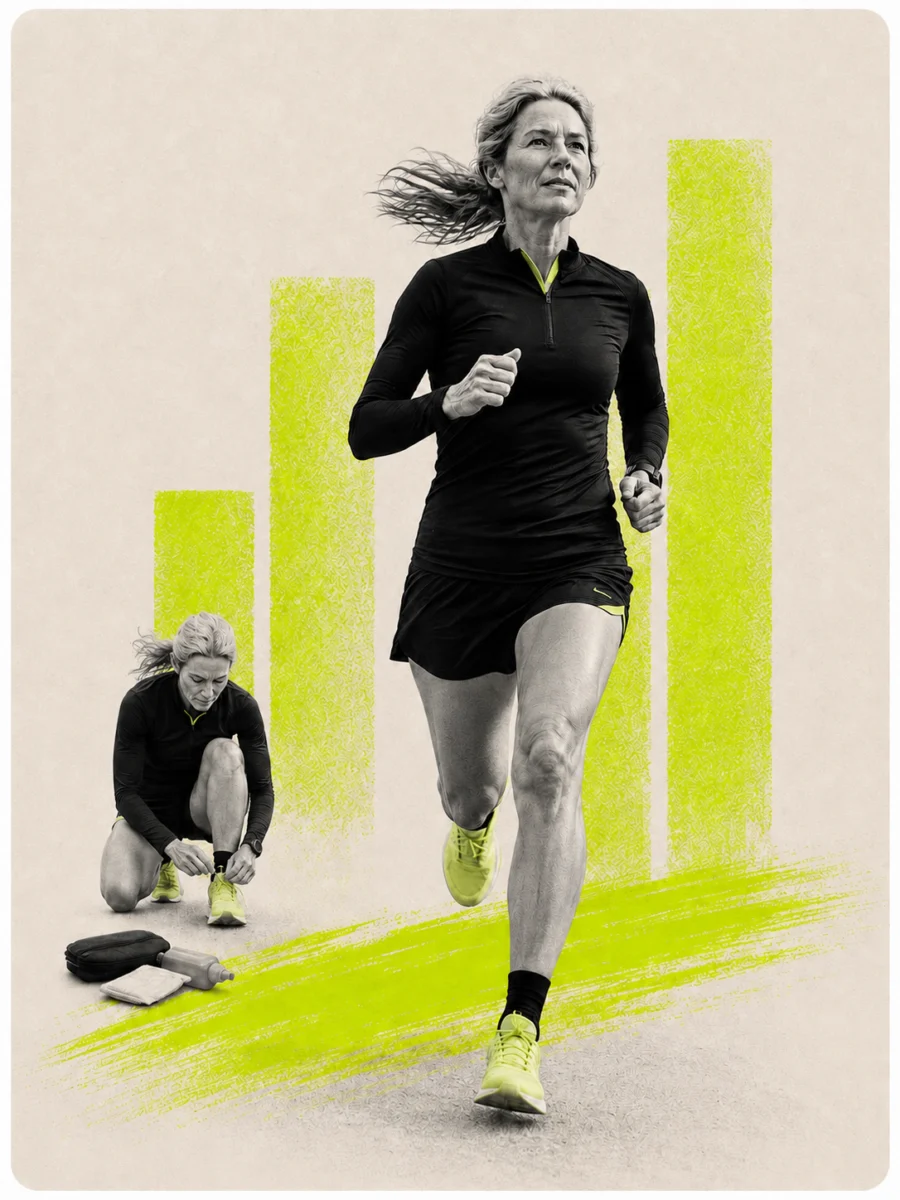
Has your usual running pace started to feel harder, your recovery slowed or your sleep become unpredictable? Perimenopause may be part of the picture. Here is how to adapt without giving up the sport you love.
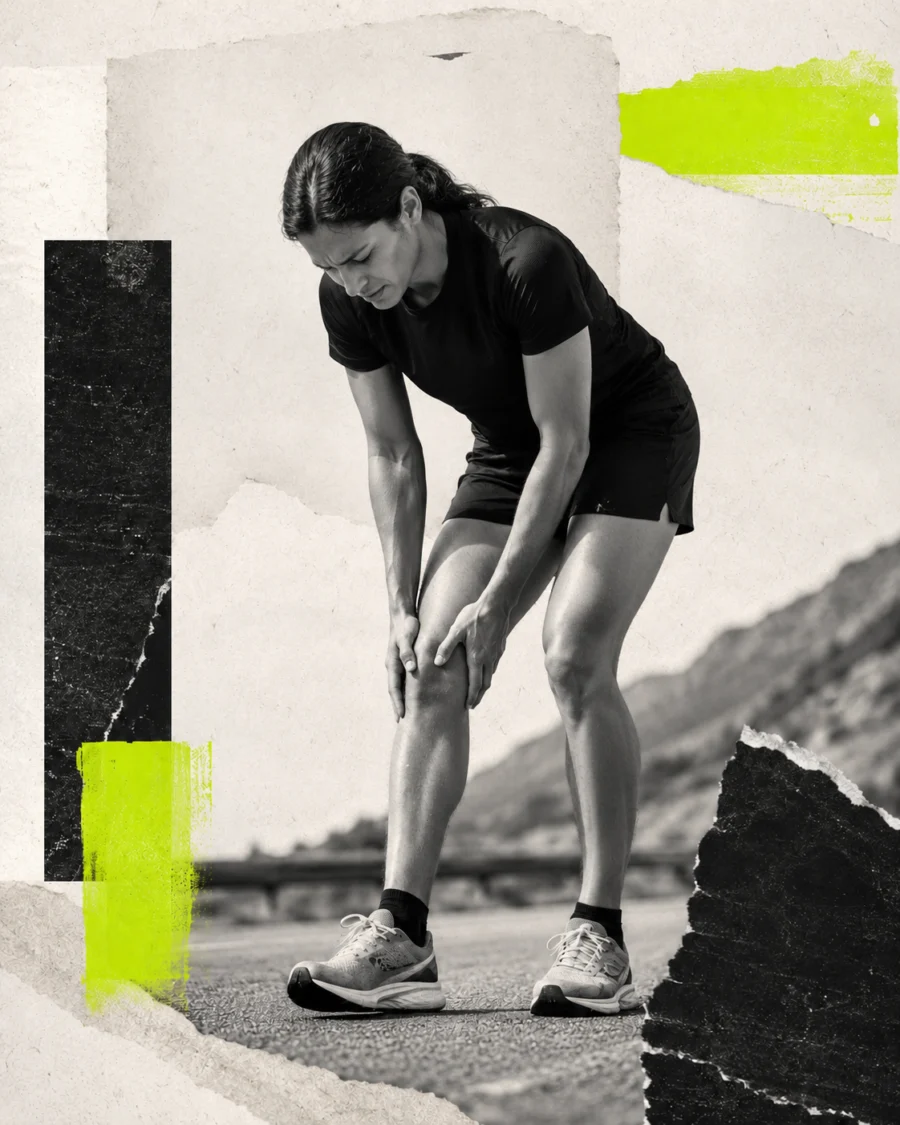
Running during perimenopause can feel as though someone has quietly changed the rules. The training plan is familiar, the effort is there, yet your pace may be less predictable. A hard session can take longer to recover from. Sleep may become unreliable, joints can feel stiffer and running in the heat may suddenly seem much tougher.
That does not mean you have lost your fitness, become less disciplined or reached the end of your best running years.
Perimenopause is a natural transition, but it can affect how you feel both during and between runs. Understanding those changes gives you the chance to adjust your training, protect your health and keep progressing – without treating every difficult session as a personal failure.
WHAT IS PERIMENOPAUSE?
Perimenopause is the period leading up to menopause, when levels of hormones including oestrogen and progesterone begin to fluctuate. It often brings changes to the menstrual cycle, but the signs can extend far beyond irregular periods.
Common symptoms include:
- disrupted sleep or night sweats
- hot flushes
- fatigue
- anxiety, low mood or irritability
- brain fog
- muscle and joint discomfort
- changes in body composition
- heavier, lighter or less predictable periods
- headaches or migraines
- bladder and pelvic-floor symptoms
Menopause is reached after 12 consecutive months without a period. However, symptoms can begin years before that point and may continue afterwards. Hormonal contraception can also make cycle changes harder to recognise.
The important point is that perimenopause does not look the same for everyone. Some runners notice only minor changes. Others find that symptoms have a clear effect on their training, confidence and recovery. This is why running during perimenopause needs an individual approach rather than a fixed set of rules.
WHY PERIMENOPAUSE IS A RUNNING CONVERSATION
Active women are not immune to menopausal symptoms. A 2025 study involving 187 female endurance athletes aged 40 to 60 found that sleep problems and physical or mental exhaustion were among the most commonly reported symptoms. Joint and muscle discomfort, weight changes and poor sleep were also among the issues athletes felt had the greatest negative effect on training and performance.
In the study, 88% reported sleep problems, 83% physical or mental exhaustion, 67% weight gain, 65% hot flushes and 63% joint or muscular discomfort. The participants included runners, cyclists, swimmers and triathletes, making the findings especially relevant to the endurance community.
This does not prove that perimenopause automatically reduces performance. The study measured athletes’ experiences rather than directly testing what hormones did to their race times. It does show, however, that even highly active women can face symptoms that make consistent training harder. Running during perimenopause is therefore not simply a question of fitness; symptoms and recovery matter too.
WHY CAN RUNNING FEEL HARDER DURING PERIMENOPAUSE?
1. POOR SLEEP CAN DISRUPT RECOVERY
Night sweats, anxiety and repeated waking can reduce both the quantity and quality of your sleep. The result may be heavy legs, a higher perceived effort and less motivation to train.
One broken night will not ruin your fitness, but repeated poor sleep can make it harder to absorb demanding sessions. If the same interval pace suddenly feels much tougher after a restless week, it may be more useful to adjust the session than to force it and add more fatigue.
2. YOUR TEMPERATURE COMFORT MAY CHANGE
Hot flushes and changes in temperature regulation can make warm-weather running, crowded gyms and hard indoor sessions feel more uncomfortable. Night sweats may also leave you feeling tired or thirsty before the day has even started.
This does not necessarily mean that your body can no longer handle exercise in the heat. It does mean you may need to take cooling and hydration more seriously than you once did.
3. MUSCLE AND JOINTS MAY NEED MORE ATTENTION
Some runners notice more stiffness, lingering muscle soreness or a sense that strength has become harder to maintain. These changes can be influenced by several factors, including age, sleep, training load, fuelling and hormonal changes.
The answer is not to stop running. It is to make strength training and recovery part of the plan rather than optional extras.
4. PERIOD CHANGES CAN AFFECT TRAINING
Periods may become irregular, closer together, further apart, lighter or heavier during perimenopause. Heavy bleeding can contribute to iron-deficiency anaemia, which may present as unusual fatigue, breathlessness, weakness or a drop in performance.
Do not assume that persistent tiredness is simply part of getting older or training hard. Speak to your GP if your periods are affecting your daily life, remain very heavy or are accompanied by ongoing fatigue.
5. THE SAME PACE MAY NOT ALWAYS CREATE THE SAME STRESS
Training plans often assume that recovery is predictable. Perimenopause may make it more variable. A pace that feels comfortable one week may feel disproportionately hard the next because of poor sleep, heavier bleeding, stress or other symptoms.
This is why effort-based training becomes so useful. Pace still matters, but it should not be the only measure deciding whether a run was successful.
IS RUNNING STILL GOOD FOR YOU DURING PERIMENOPAUSE?
Yes. Running remains a valuable form of cardiovascular and weight-bearing exercise. The NHS recommends regular weight-bearing activity, including running, alongside resistance exercise to help protect bone health during perimenopause and menopause.
Exercise can also support mood, fitness, confidence and long-term health. What it cannot do is guarantee that symptoms disappear. A 2024 overview of research found some evidence that exercise can improve certain menopause symptoms, but the results were not strong enough to recommend one specific form of exercise as a universal treatment.
In other words: running can be part of the solution, but you do not need to pretend it fixes everything.
HOW TO ADAPT YOUR RUNNING DURING PERIMENOPAUSE
1. MAKE YOUR TRAINING PLAN FLEXIBLE
A good training plan should guide you, not trap you. Keep the purpose of the session, but allow the exact pace or volume to change when symptoms are high.
For example:
- Replace a hard interval session with an easy run after several nights of poor sleep.
- Run repetitions by effort rather than forcing an old pace.
- Shorten a long run if fatigue continues to rise instead of settling.
- Move a key session by 24 or 48 hours when recovery is clearly incomplete.
This is not giving up. It is managing training stress so you can stay consistent over the full month, not simply survive one workout.
2. KEEP SOME INTENSITY – BUT USE IT CAREFULLY
Perimenopause does not mean every run should become slow. Intervals, hills and tempo work can still support fitness and performance. The goal is to place hard sessions where you can recover from them.
Try to separate demanding runs with genuinely easy days. If your usual easy pace feels hard, slow down and use conversational effort as your guide. Easy running only works when it is easy enough to recover from.
3. USE STRENGTH TRAINING TO SUPPORT RUNNING DURING PERIMENOPAUSE
Strength training supports muscles, tendons and bones – all of which matter to runners as they move through perimenopause and beyond. Recent resistance-training guidance also reinforces that effective sessions do not require a complicated gym routine or specialist equipment.
A runner-focused programme could include:
- squats or split squats
- Romanian deadlifts or hip hinges
- calf raises
- step-ups or lunges
- rows and presses
- carries
- controlled jumping or hopping, where appropriate
Progress the exercises gradually. The final repetitions should feel challenging while your technique remains controlled. If you have osteoporosis, pelvic-floor symptoms, pain or a history of stress fractures, seek individual guidance before adding impact work.
4. FUEL THE TRAINING YOU ARE ACTUALLY DOING
Good fuelling is essential for running during perimenopause. This is not the time to respond to every body-composition change by cutting food. Under-fuelling can compromise recovery, mood, bone health and training quality.
Build meals around a reliable source of carbohydrate, protein, colourful fruit or vegetables and dietary fat. Include carbohydrate before demanding or longer runs, then combine carbohydrate and protein afterwards to support recovery.
Protein is particularly useful when spread across the day rather than saved for one large evening meal. If you are struggling with appetite, heavy periods, gastrointestinal symptoms or uncertainty around your intake, a sports dietitian can help you create a practical plan.
5. PREPARE FOR HEAT AND NIGHT SWEATS
When temperature-related symptoms are disruptive:
- run earlier or later on hot days
- choose breathable, removable layers
- keep water beside the bed if night sweats are common
- start key sessions well hydrated
- use a fan for treadmill sessions
- adjust pace expectations in warm or humid weather
Avoid measuring the success of a summer run against a cool-weather pace. Heat adds stress for every runner, and symptoms may add another layer.
6. DO NOT IGNORE YOUR PELVIC FLOOR
Leaking urine, pelvic heaviness or pressure during running may be common, but they should not be treated as something women simply have to accept. Pelvic-floor muscle training has been shown to reduce leakage in female athletes, but the correct approach is individual.
A pelvic-health physiotherapist can assess strength, coordination, breathing, impact tolerance and training load. Simply doing more squeezes is not always the answer.
7. TRACK SYMPTOMS AS WELL AS MILES
Your running watch records pace and heart rate, but it cannot explain the full picture. Add a few simple notes to your training log:
- sleep quality
- energy levels
- menstrual bleeding
- hot flushes or night sweats
- joint or muscle discomfort
- mood and motivation
- perceived effort
After six to eight weeks, patterns may become easier to spot. You might discover that poor sleep is a stronger predictor of a difficult run than your cycle day, or that heavy bleeding regularly affects one part of the month.
A SIMPLE WEEK OF PERIMENOPAUSE-FRIENDLY RUNNING
There is no universal plan for running during perimenopause, but a balanced week could look like this:
Monday: Strength training
Tuesday: Controlled intervals or hills
Wednesday: Rest or gentle mobility
Thursday: Easy run with optional strides
Friday: Strength training
Saturday: Rest or low-intensity cross-training
Sunday: Easy long run
The structure gives the harder running session and long run space to recover. If symptoms are high, Tuesday can become an easy run and the quality session can move later in the week. Consistency matters more than completing every session on its original date.
WHEN SHOULD YOU SPEAK TO A GP?
Speak to a GP or qualified healthcare professional if symptoms are affecting your quality of life, work, sleep or ability to exercise. You should also seek advice for:
- very heavy or prolonged periods
- bleeding between periods or after sex
- any bleeding after menopause
- persistent fatigue or breathlessness
- recurrent stress injuries
- significant pelvic pain or pressure
- new or worsening bladder symptoms
- low mood or anxiety that is becoming difficult to manage
Treatments, including hormone replacement therapy, may be appropriate for some people, while non-hormonal options may suit others. That decision should be based on your symptoms, medical history and individual risks – not on what another runner uses.
PERIMENOPAUSE – FREQUENTLY ASKED QUESTIONS
CAN PERIMENOPAUSE MAKE YOUR RUNNING PACE SLOWER?
It can affect pace indirectly. Poor sleep, fatigue, heavy bleeding, heat discomfort and slower recovery can all increase how hard a familiar pace feels. A temporary change does not automatically mean your long-term performance is declining.
SHOULD YOU STOP RUNNING DURING PERIMENOPAUSE?
Most runners do not need to stop. Running provides cardiovascular and weight-bearing benefits. You may, however, need to adjust training load, improve recovery or seek help for symptoms that are interfering with exercise. Successful running during perimenopause is often built on adaptation, not withdrawal.
SHOULD YOU PLAN TRAINING AROUND YOUR MENSTRUAL CYCLE?
Perimenopausal cycles can become unpredictable, so a rigid cycle-based plan may be impractical. Tracking symptoms and perceived recovery may give you more useful information than following cycle day alone.
DOES STRENGTH TRAINING HELP RUNNERS DURING PERIMENOPAUSE?
Strength training can help maintain muscle function and provides an important stimulus for bone health. It may also improve a runner’s tolerance to the repeated loading involved in running.
CAN RUNNING REDUCE HOT FLUSHES?
Exercise supports overall health, but current research is not conclusive enough to promise that running will reduce hot flushes for everyone. If they are disrupting sleep or daily life, speak to a healthcare professional about the available options.
THE BOTTOM LINE
Running during perimenopause may require more flexibility, but it does not require lower ambition.
Your body is not failing because recovery has become less predictable or because a familiar pace sometimes feels harder. Those changes are information. Use them to shape a smarter plan: protect sleep, fuel properly, lift weights, manage heat, track symptoms and seek medical support when you need it.
The goal is not to train exactly as you did ten years ago. It is to build the strongest, healthiest runner you can be now—and for the years still ahead.
SOURCES AND FURTHER READING
- Frequency and perceived influence of menopausal symptoms on training and performance in female endurance athletes — PLOS One, 2025
- Things you can do to help menopause and perimenopause symptoms — NHS, reviewed 2026
- Symptoms of menopause and perimenopause — NHS, reviewed 2026
- The impact of physical activity and exercise interventions on menopause symptoms — BMC Women’s Health, 2024
- Resistance training effects on healthy postmenopausal women — systematic review and meta-analysis, 2024
- Nutritional concerns of the female athlete — position stand, 2023
- Pelvic floor muscle training interventions in female athletes — systematic review and meta-analysis, 2024
- Heavy periods — NHS
This article is for general information only and is not a substitute for individual medical advice, diagnosis or treatment.