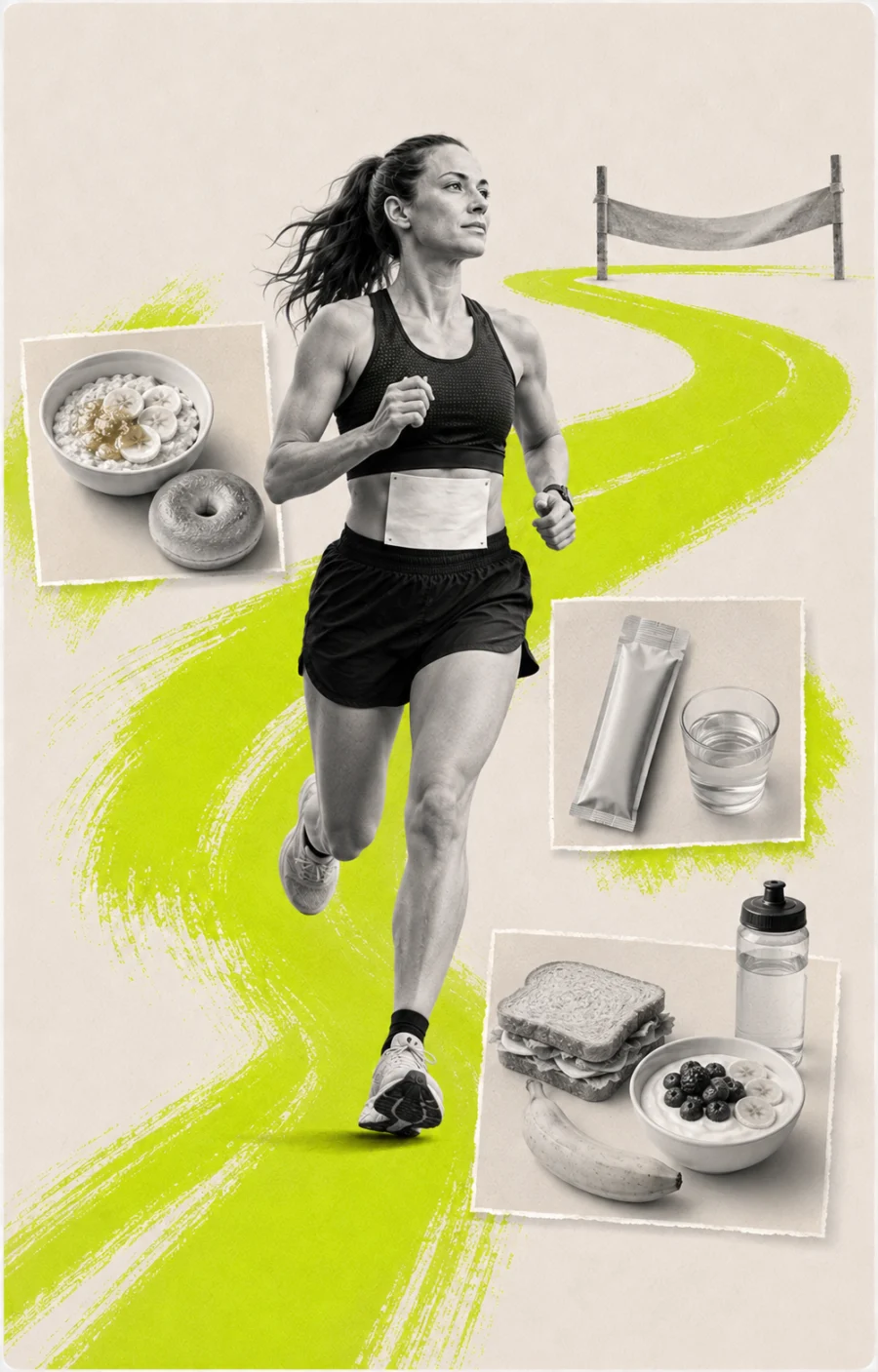
Half marathon nutrition sits in an awkward middle ground: the distance is too long to ignore fuelling, but short enough that you do not need to turn race week into a spreadsheet. From your day-before meals and race-morning breakfast to gels, hydration and recovery, here is how to fuel 13.1 miles without overcomplicating it.
A half marathon is long enough for nutrition to affect your performance – but short enough that many runners underestimate it.
You do not need the military-level fuelling operation of an ultramarathon. You probably need more than a banana grabbed on the way out of the door.
The aim is simple: start with full energy stores, take in enough carbohydrate to support your pace and finish without your stomach filing a formal complaint.
Here is how to fuel a half marathon properly.
Why nutrition matters in a half marathon
Your body uses a mixture of carbohydrate and fat to produce energy while running. As your effort increases, it relies more heavily on carbohydrate stored in the muscles and liver as glycogen.
Those stores are limited.
For faster runners, a half marathon may be over before carbohydrate availability becomes a major limitation. For someone running for 90 minutes, two hours or longer, nutrition can have a much greater influence on pace, concentration and how the final few miles feel.
The purpose of a half-marathon nutrition plan is to:
- Begin the race with sufficient glycogen
- Maintain blood glucose during the run
- Reduce the risk of late-race fatigue
- Support hydration without overdrinking
- Avoid unnecessary gastrointestinal problems
- Begin the recovery process after finishing
Nutrition will not rescue unrealistic pacing – but it can prevent poor fuelling from making a realistic pace feel impossible.
Do you need to carb-load for a half marathon?
Possibly, but it does not need to involve three days of eating everything beige.
Traditional carbohydrate loading is most useful before endurance events lasting longer than approximately 90 minutes. If you expect to finish around or beyond this point, increasing your carbohydrate intake during the final 24–48 hours can help maximise glycogen availability.
This does not mean eating significantly more food. It means allowing carbohydrate to take up a greater proportion of your usual meals.
Suitable options include:
- Rice, pasta, noodles and potatoes
- Bread, bagels and wraps
- Oats and lower-fibre cereals
- Bananas and other familiar fruits
- Fruit juice and smoothies
- Yoghurt with honey or granola
- Pancakes, rice cakes or cereal bars
Keep a normal amount of protein in your meals, but consider reducing particularly high-fat or high-fibre foods if they tend to cause digestive problems.
Carb-loading is preparation – not an eating competition.
What to eat the day before
The day before your race should feel reassuringly normal.
Base your meals around familiar, carbohydrate-rich foods and avoid experimenting with anything unusually spicy, fatty or fibrous. Continue eating regular meals rather than attempting to fit your entire fuelling plan into one enormous dinner.
Example day-before meals
Breakfast: Porridge with banana, honey and yoghurt
Lunch: Chicken and rice bowl with cooked vegetables
Snack: Bagel with jam or a cereal bar and fruit
Dinner: Pasta with a familiar tomato-based sauce and a moderate portion of protein
Evening snack: Toast, cereal or yoghurt if required
Drink regularly throughout the day, but do not force excessive amounts of water. Pale-yellow urine generally suggests adequate hydration; completely clear urine all day may mean you are drinking more than you need.
Limit alcohol and avoid foods you already know cause bloating, urgency or reflux.
What to eat on race morning
Your pre-race meal has two main jobs:
- Replenish liver glycogen after the overnight fast
- Provide energy without leaving you feeling overly full
Sports-nutrition guidance recommends approximately 1–4g of carbohydrate per kilogram of body weight during the one to four hours before exercise, with the amount depending on timing and individual tolerance. ACSM joint position statement
You do not have to force down the upper end of that range. Most runners should focus on eating a familiar carbohydrate-rich breakfast around two to three hours before starting.
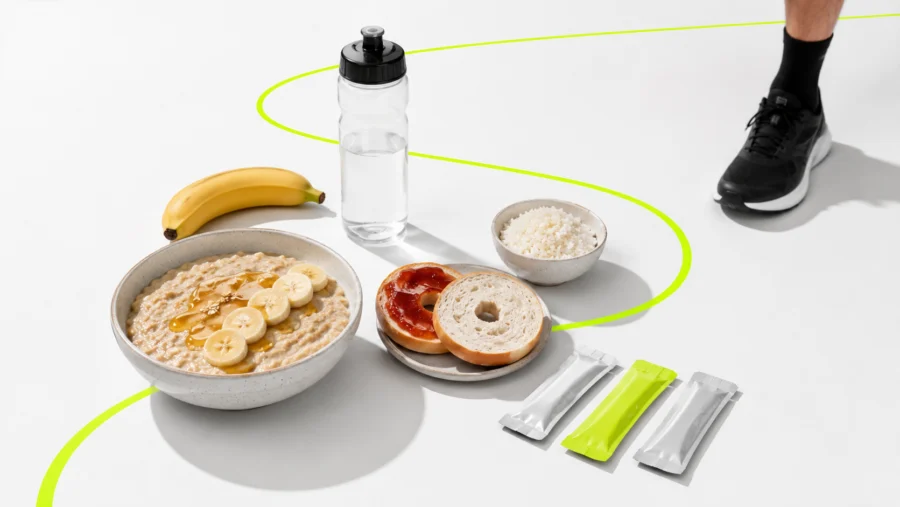
Good pre-race breakfast options
- Porridge with banana and honey
- A bagel or toast with jam
- Lower-fibre cereal with milk and a banana
- Pancakes with fruit and syrup
- Rice pudding with fruit
- A smoothie with toast or a bagel
Keep fat and fibre moderate, particularly if you have a sensitive stomach. A large fry-up may contain plenty of energy, but it is unlikely to feel helpful at mile four.
Protein can be included, but carbohydrate should remain the main focus.
What if you cannot eat early in the morning?
Early race starts can make breakfast difficult. If you struggle to eat, use smaller and easier-to-digest options such as:
- A banana
- Toast with jam
- A small bowl of cereal
- A carbohydrate drink
- A smoothie
- A cereal or energy bar
You could divide breakfast into two smaller portions: one when you wake up and another snack closer to the start.
Practise this before long runs. Your race-morning breakfast should already have passed several training-run auditions.
Should you eat immediately before the race?
If breakfast was several hours earlier, a small carbohydrate snack 15–30 minutes before starting may help.
Options include:
- One energy gel
- A banana
- A few energy chews
- Half an energy bar
- A small carbohydrate drink
Aim for approximately 20–30g of carbohydrate and take water with a standard concentrated gel.
This snack is optional. If eating close to running makes you feel sick, rely on your earlier breakfast and begin fuelling during the race instead.
How much carbohydrate do you need during a half marathon?
For exercise lasting between one and 2.5 hours, established guidance recommends approximately 30–60g of carbohydrate per hour. Carbohydrates for training and competition
Your ideal intake depends on:
- Your expected finish time
- The carbohydrate content of each product
- What you ate before starting
- Whether you use gels, drinks or chews
- Your previous experience and gut tolerance
Half-marathon fuelling guide
| Expected finish time | Suggested approach |
|---|---|
| Under 75 minutes | In-race carbohydrate may not be necessary if you are well fuelled |
| 75–90 minutes | Consider 20–30g of carbohydrate at approximately 30–45 minutes |
| 90–120 minutes | Aim for 30–60g per hour; usually 2–3 gels depending on their carbohydrate content |
| More than two hours | Begin after 25–30 minutes and continue every 30–40 minutes; usually 3–4 gels |
These are starting points rather than compulsory targets. A gel containing 30g of carbohydrate provides considerably more fuel than one containing 20g, so always check the label.
Sports drinks and chews also count towards your hourly total.
Example plan for a two-hour half marathon
A simple race-day strategy could look like this:
Three hours before: Porridge with banana and honey, plus a drink
15 minutes before: Optional gel containing 20–30g carbohydrate
30 minutes: First in-race gel
65–70 minutes: Second gel
100–105 minutes: Third gel if required
During the race: Water according to thirst, conditions and product instructions
After finishing: Carbohydrate, protein and fluid within the next one to two hours
Do not copy this plan directly without testing it. Some runners will need less, while others perform better towards the upper end of the recommended range.
Gels, chews or sports drinks?
There is no compulsory format. Your digestive system does not award points for consuming a gel specifically – it responds to the carbohydrate.
Energy gels
Easy to carry and measure, but the concentrated texture can be difficult for some runners. Most should be taken with water.
Energy chews
Allow you to spread your intake across the race, although chewing while running is not always convenient.
Sports drinks
Provide carbohydrate and fluid together but may not contain enough carbohydrate alone to meet your target.
Real food
Foods such as bananas or small pieces of energy bar can work, but they are generally less convenient during a road half marathon.
The best option is the one you can carry, consume and digest while maintaining race pace.
How much should you drink?
There is no universal amount of water that every runner should consume.
Fluid needs change according to:
- Temperature and humidity
- Running pace
- Body size
- Individual sweat rate
- Access to water stations
- How much fluid you consumed before starting
Begin the race normally hydrated and drink according to thirst and a strategy tested during training. Avoid attempting to drink at every station simply because water is available.
Overdrinking can dilute blood sodium and contribute to exercise-associated hyponatraemia. Research identifies thirst-guided drinking as an individualised way to reduce this risk. Exercise-associated hyponatraemia guidance
Clear urine is not a race-day achievement. The goal is normal hydration – not carrying an aquarium to the start line.
Do you need electrolytes?
Electrolytes, particularly sodium, help regulate fluid balance and replace some of what is lost through sweat.
A standard half marathon in cool conditions may not require a dedicated electrolyte product, especially if you begin well hydrated and have eaten normally beforehand.
Electrolytes may become more useful when:
- The race is hot or humid
- You are running for more than two hours
- You have a high sweat rate
- Your sweat leaves visible white salt marks
- You know from training that additional sodium helps
Electrolytes do not replace carbohydrate. A zero-calorie electrolyte drink may support hydration, but it will not provide meaningful energy.
What about caffeine?
Caffeine may reduce perceived effort and improve endurance performance, but it is optional.
You could consume it through:
- Your usual pre-race coffee
- A caffeinated gel
- A carbohydrate drink containing caffeine
Calculate the total amount rather than combining coffee and several caffeinated gels without checking. Excessive caffeine can cause anxiety, nausea, shaking, an elevated heart rate or an urgent toilet stop.
If you do not normally use caffeine before running, race morning is not the time to begin.
Train your stomach as well as your legs
A nutrition plan needs to be practised.
Research suggests that regularly consuming carbohydrate during training can improve tolerance and reduce gastrointestinal symptoms. Training the Gut for Athletes
During your long runs, practise:
- Your race-morning breakfast
- The timing of your first gel
- Your carbohydrate-per-hour target
- Drinking water with gels
- The exact products and flavours
- Fuelling at your intended race pace
- Carrying and opening packets while moving
Begin with a manageable amount and increase gradually. Taking three gels on race day after using none during training is less a strategy and more a digestive gamble.
What to eat after a half marathon
Once you finish, focus on carbohydrate, protein and fluid.
Carbohydrate begins replenishing the glycogen used during the race, while protein supports muscle repair. A practical target is approximately 20–30g of protein, accompanied by a carbohydrate-rich meal or snack.
Suitable options include:
- A smoothie with milk or yoghurt, fruit and oats
- A bagel with eggs and a banana
- Greek yoghurt with granola, honey and fruit
- A chicken or tofu rice bowl
- Chocolate milk with a sandwich
- Pasta with protein and vegetables
You do not need to eat the moment you cross the finish line, but try to have something within the next one to two hours – particularly if your appetite tends to disappear after hard running.
Continue drinking gradually and include some sodium through food or an electrolyte drink if you have sweated heavily.
Common half-marathon nutrition mistakes
Cutting carbohydrates during the taper
Lower training volume does not mean your body no longer needs fuel. The final days are when you want glycogen stores to be well supplied.
Eating one enormous pasta dinner
Your body benefits more from carbohydrate spread across regular meals than from one uncomfortable pre-race feast.
Skipping breakfast
Even if your muscles remain well fuelled, liver glycogen falls overnight. A familiar breakfast helps restore carbohydrate availability before the race.
Waiting until you feel exhausted
Start fuelling before fatigue develops. Carbohydrate does not work instantly.
Trying a new gel
The free product from the race expo may be excellent. That does not mean your stomach wants to meet it at mile nine.
Drinking as much as possible
Both dehydration and overhydration can cause problems. More water is not automatically better.
Forgetting that drinks contain carbohydrate
Sports drinks, gels and chews all contribute to your hourly intake. Count the total rather than treating each product separately.
Your half-marathon nutrition checklist
The day before
- Eat familiar carbohydrate-rich meals
- Keep protein normal
- Reduce fibre and fat if you are sensitive
- Drink normally
- Limit alcohol
- Prepare your race fuel
Race morning
- Eat two to three hours before starting
- Make carbohydrate the main focus
- Use foods already tested in training
- Take an optional carbohydrate snack shortly before the start
During the race
- Aim for 30–60g of carbohydrate per hour if running beyond 75–90 minutes
- Begin before you feel tired
- Take gels according to time rather than distance
- Count carbohydrate from drinks and chews
- Drink according to thirst and conditions
After finishing
- Eat carbohydrate and 20–30g of protein
- Rehydrate gradually
- Replace some sodium if you have sweated heavily
- Enjoy the post-race meal – you have earned that part
The bottom line
Half-marathon nutrition does not need to be complicated.
Eat familiar carbohydrate-rich foods in the lead-up, have a proper race-morning breakfast and begin fuelling early if you expect to be running for longer than 75–90 minutes.
The precise number of gels matters less than the total carbohydrate you consume and whether your stomach has been trained to tolerate it.
Test the plan. Adjust it. Repeat it.
By race morning, your nutrition should feel like one of the most predictable parts of the day.
References
- Nutrition and Athletic Performance – ACSM joint position statement
- Carbohydrates for Training and Competition – Burke et al.
- Training the Gut for Athletes – Jeukendrup
- Exercise-associated hyponatraemia and thirst-guided drinking
This article is for general educational purposes and does not replace personalised medical or nutritional advice. Runners with diabetes, gastrointestinal conditions, food allergies or other health concerns should consult a registered sports dietitian or appropriate healthcare professional.